Quick Answer
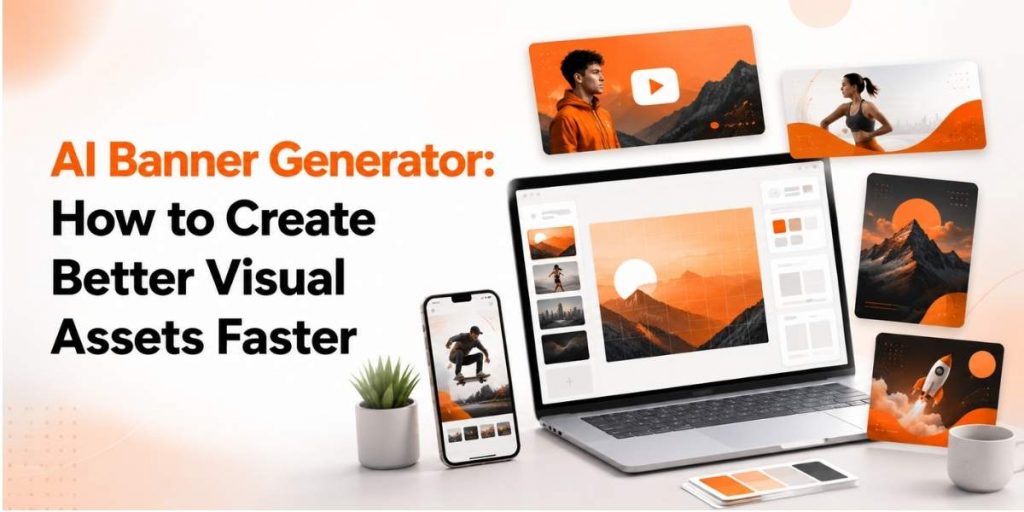
An AI banner generator helps creators, marketers, and social media teams create banners, YouTube thumbnails, posters, campaign visuals, and branded social assets faster. The best workflow starts with a clear message, then uses AI to create visual direction, improve hierarchy, match the platform size, and reuse the same brand style across multiple channels.
Visual assets decide how quickly people understand your content. A YouTube thumbnail must make someone stop scrolling. A social banner must explain the offer fast. A campaign poster must show the message without looking crowded.
The problem is that most teams need many versions of the same creative. One idea may need a YouTube thumbnail, Instagram post, LinkedIn banner, ad creative, blog graphic, and video cover. Creating each one manually can slow down the entire publishing workflow.
An AI banner generator makes this easier by helping teams turn prompts, topics, product ideas, and campaign messages into usable visual assets. When paired with a thumbnail checklist and reusable brand rules, AI can help teams create better visuals without starting from a blank canvas every time.
In This Guide
Why Visual Assets Slow Down Content Teams
Many teams can write captions, scripts, or video ideas quickly. The delay often starts when the content needs a strong visual. A weak banner can reduce attention, while an unclear thumbnail can make even a good video look less clickable.
The work becomes harder when each platform needs a different format. A YouTube thumbnail needs a clear subject and title match. A LinkedIn banner needs credibility. An Instagram post needs quick visual impact. An ad creative needs a simple message and strong hierarchy.
| Asset Type | What Usually Goes Wrong | What AI Can Help With |
|---|---|---|
| YouTube thumbnail | Unclear subject, weak contrast, too much text | Generate clearer visual concepts and layouts |
| Social banner | Message gets lost in a crowded design | Create focused visual hierarchy |
| Campaign poster | Design does not match the offer or audience | Explore different creative directions faster |
| Video cover | Cover frame does not explain the video | Build a better title-matched visual |
Creative truth
A good banner is not just beautiful. It helps the viewer understand what the content is about in seconds.
What an AI Banner Generator Should Help You Create
An AI banner generator should help you create platform-ready visual assets from simple prompts. This can include YouTube thumbnails, social media banners, posters, campaign graphics, blog visuals, ad creatives, and video cover images.
If your main need is video preview design, a focused AI thumbnail generator can help you create click-worthy thumbnails for YouTube, social media, and video content. For broader banners and visuals, the same idea can be adapted into posters, social graphics, and campaign creatives.
1
Match
Make the visual match the topic, title, and audience.
2
Focus
Keep one main subject, message, or visual anchor.
3
Reuse
Build a visual style that can work across platforms.
Simple definition
An AI banner generator turns a prompt or creative brief into visual assets for thumbnails, banners, posters, social posts, and campaigns.
Create click-worthy thumbnails with Flonnect
Use AI to create YouTube thumbnails, social media banners, campaign visuals, and branded creative assets faster.
From Topic to Banner: A Faster Creative Workflow

A faster visual workflow starts before opening a design tool. The team should know the content topic, audience, message, platform, and key visual direction. AI works better when the input is specific.
Start with the content promise
Decide what the viewer should expect. A banner for “5 editing mistakes” should feel different from a banner for “new product launch.”
Write a visual prompt
Mention the audience, platform, mood, subject, background, colors, text area, and style. A vague prompt usually creates a vague banner.
Generate a strong first visual
Use an AI image generator to create a draft that matches the topic and platform. This is especially useful when you need fresh creative directions for banners, thumbnails, campaign visuals, and blog graphics.
Check hierarchy before export
The main subject should be clear first. The text should support the idea, not fight with the image. Remove anything that creates visual noise.
Clean the final visual
If the banner has weak cutouts, messy backgrounds, or visual distractions, use an AI photo editor to improve the final asset before publishing.
Save the winning style
When a visual style works, turn it into a reusable creative pattern. This helps future thumbnails, posters, and banners look consistent.
Thumbnail Rules That Also Improve Banners and Posters
YouTube thumbnails teach a useful lesson for all visual assets: clarity wins. If the viewer cannot quickly understand the topic, even a beautiful graphic may not perform well.
| Rule | Why It Works | Use It For |
|---|---|---|
| One clear subject | The eye knows where to look first | Thumbnails, posters, ad creatives |
| Title match | The visual supports what the content promises | YouTube thumbnails and blog graphics |
| Strong contrast | The creative remains readable on small screens | Mobile-first social assets |
| Limited text | The message stays easy to scan | Banners, posters, video covers |
Creative shortcut
Before publishing any visual asset, shrink it on screen. If it still makes sense at a small size, the design is usually clearer.
How One Creative Idea Becomes Many Social Assets

AI becomes more useful when one creative direction can support many outputs. A campaign concept can become a thumbnail, poster, social media banner, video cover, carousel opener, and ad creative with the right adaptation.
For more creative campaign directions, an AI art generator can help create stylized visuals, promotional artwork, brand images, and concept graphics that can later be adapted into different formats.
| Core Idea | Asset Version | What Changes |
|---|---|---|
| Video topic | YouTube thumbnail | Bolder subject, short title, high contrast |
| Campaign message | Social banner | More space for offer and CTA |
| Product feature | Poster or ad creative | Clearer benefit and product focus |
| Creator brand | Reusable template | Consistent colors, fonts, layout, and mood |
Workflow tip
Do not create every banner from scratch. Create one strong master visual, then adapt it for each channel.
Where Flonnect Fits in the Visual Asset Workflow
Flonnect helps creators and teams move faster from idea to visual asset. You can start with AI-powered thumbnail creation, then use image and art tools to build supporting creative directions for campaigns, videos, and social media.
| Creative Need | What Slows It Down | Flonnect Use |
|---|---|---|
| YouTube thumbnail | Designing from scratch every time | Generate click-worthy thumbnail ideas with AI |
| Social banner | Weak layouts and inconsistent branding | Use AI image generation for reusable visual styles |
| Campaign poster | Creative direction takes too long | Generate promotional artwork and brand visuals |
| Social publishing | Captions and post copy delay launch | Create post copy and captions faster |
If the banner supports a video campaign, the AI Video Generator can help turn the same creative direction into a video concept. For social distribution, the AI Social Media Post Creator can help prepare captions, post ideas, and supporting copy around the visual.
Flonnect angle
Use AI to create the first visual faster, then refine it using clear rules: message match, contrast, hierarchy, platform size, and brand consistency.
Mistakes That Make AI-Generated Banners Look Weak
Mistake 1: Asking AI for a “nice banner”
A vague prompt creates a generic result. Add platform, topic, subject, mood, colors, and layout direction before generating the visual.
Mistake 2: Adding too many visual elements
More elements do not always make a banner better. Too many icons, objects, colors, and text blocks can make the message harder to understand.
Mistake 3: Ignoring mobile readability
Most thumbnails and social creatives are viewed on small screens. If the design only works on desktop, it may fail where people actually see it.
Mistake 4: Changing style every time
Creators and brands need consistency. Reuse color systems, layouts, and visual moods so people start recognizing your content faster.
Quick Checklist Before Publishing Any Banner
Before publishing, check:
✓ Does the banner match the title or campaign message?
✓ Is there one clear subject or focal point?
✓ Can the viewer understand the idea quickly?
✓ Is the text readable on mobile?
✓ Does the design have enough contrast?
✓ Does the creative follow brand colors or style?
✓ Can this design be adapted into another asset?
Create better visual assets faster with Flonnect
Generate thumbnails, banners, posters, campaign visuals, and social assets with AI-powered creative tools built for faster content production.
For YouTubers, marketers, creators, social media teams, and campaign teams.
Frequently Asked Questions