Training & Education
Quick Answer
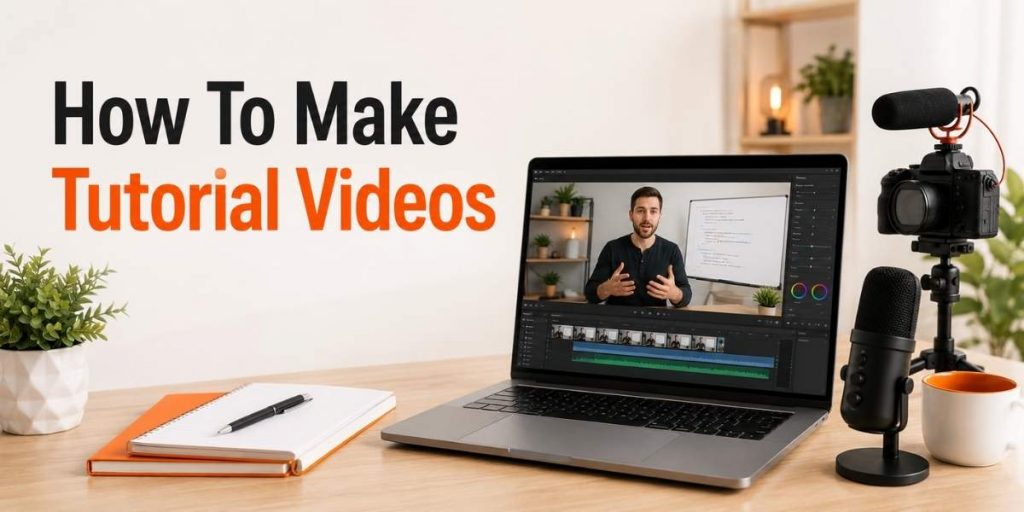
To make tutorial videos, start with one clear learning outcome, write a short lesson plan, record your screen with voice or webcam, explain each step slowly, edit out confusion, and share the final video where learners can revisit it anytime. Teams and creators should treat tutorial videos as reusable learning assets, not one-time recordings.
Tutorial videos work because people understand faster when they can see the process. A trainer can explain a tool in text, but a screen walkthrough shows the exact clicks. An educator can describe a concept verbally, but a recorded lesson gives students something they can replay. An HR team can repeat onboarding steps live, but a reusable training video saves that effort every week.
If you want a simple way to create tutorials, lessons, onboarding videos, and training content, Flonnect Screen Recorder lets you record your screen, webcam, and audio for tutorials, demos, product walkthroughs, presentations, and training videos.
This guide shows a practical tutorial video workflow for educators, HR teams, trainers, course creators, and internal teams. The goal is simple: record once, teach clearly, and reuse the lesson across classes, onboarding, employee training, and online courses.
1
Clear learning outcome
Every tutorial should answer one learner question or teach one repeatable process.
3
Core recording elements
Screen, voice, and optional webcam make tutorials clearer and more personal.
5
Reusable formats
One tutorial can become a class replay, onboarding guide, SOP, course lesson, or help asset.
Note: Use these as tutorial planning benchmarks. The best structure depends on your audience, topic, platform, and training goal.
Table of Contents
Do Not Start With Recording — Start With the Learning Outcome
The biggest mistake in tutorial videos is opening the recorder before deciding what the learner should understand. That creates long videos, repeated explanations, and unclear endings. A tutorial should not feel like a casual walkthrough. It should guide the viewer from confusion to completion.
Before recording, write one sentence: “After watching this video, the learner will be able to…” This one line keeps the tutorial focused. It also helps you decide what to include, what to skip, and when the lesson is complete.
Training team note: A good tutorial video does not explain everything. It explains the right thing clearly enough that the learner can repeat the process without asking again.
| Tutorial Goal | Best Video Format | What to Avoid |
|---|---|---|
| Teach a software step | Screen recording with voiceover | Too many unrelated features |
| Explain a concept | Slides, webcam, and examples | Abstract theory without visuals |
| Train employees | Step-by-step workflow video | Long policy explanations without examples |
| Build an online course | Short lesson modules | One oversized lecture covering many outcomes |
Record Once, Teach Many Times
The real value of tutorial videos is reuse. A trainer records a process once and uses it for every new employee. An educator records a lesson once and shares it with multiple batches. A course creator records a module once and turns it into part of a paid course.
Classroom reuse
Record lectures or concept explanations so students can revisit difficult topics after class.
Employee onboarding
Turn repeated onboarding explanations into reusable training videos for new hires.
Course content
Break a course into focused modules that learners can watch in order and return to later.
Reuse rule: If you explain the same process more than twice, record it. If a recorded tutorial helps one group, organize it so the next group can use it too.
A Simple Tutorial Video Lesson Plan You Can Reuse
A tutorial video does not need a complicated script. It needs a structure that makes the learner feel guided. The simplest format is: context, goal, steps, recap, next action.
For educators and course creators, Flonnect’s online lecture recorder use case is helpful because it supports screen recording, webcam overlay, voice narration, editing, annotations, and subtitles for professional video lessons.
Open with the problem
Tell learners why the tutorial matters. Example: “In this video, you’ll learn how to submit your assignment as a recorded walkthrough.”
Show the exact steps
Move slowly through the process. Pause at decisions, explain what learners should see, and avoid switching screens too quickly.
End with a useful recap
Summarize what was completed and tell learners what to do next. A tutorial should end with confidence, not uncertainty.
Your Recording Setup Should Make the Lesson Easier to Follow
A good tutorial is not about expensive production. It is about clarity. Learners should be able to hear your voice, see the important part of the screen, and understand where the cursor is moving.
Flonnect’s video creation software page explains a useful recording setup: screen, webcam, flexible audio capture, annotations, and editing tools that help make videos more engaging and easier to follow.
| Setup Element | Why It Matters | Best For |
|---|---|---|
| Screen recording | Shows the exact process | Software tutorials, tools, workflows |
| Webcam overlay | Adds human presence and trust | Teaching, coaching, onboarding |
| Microphone audio | Explains why each step matters | All tutorial videos |
| Annotations | Draws attention to key areas | Training, product demos, classroom lessons |
Create tutorials without a complicated setup
Use Flonnect to record your screen, webcam, and audio for training videos, online lessons, onboarding guides, and course modules.
Turn One Tutorial Into Lessons, SOPs, and Course Assets
The smartest tutorial workflow is not “record and forget.” It is “record, organize, reuse.” One clean tutorial can support classrooms, HR onboarding, internal documentation, support training, and course creation.
Reuse checklist idea: After recording a tutorial, save the title, topic, audience, link, transcript, and best use case. This turns scattered videos into a real learning library.
| Original Tutorial | Reusable Asset | Best Owner |
|---|---|---|
| Software walkthrough | Internal SOP video | Operations or HR |
| Lecture recording | Replay lesson | Educator or trainer |
| Onboarding guide | New hire training module | HR or team manager |
| Course explanation | Online course lesson | Course creator |
Who Should Create Tutorial Videos?
Tutorial videos are useful whenever a process needs to be explained more than once. That includes classroom teaching, employee training, customer education, online courses, student assignments, and team documentation.
Educators
Record lessons, concept explanations, feedback videos, and replay material for students who need flexible learning.
HR teams
Create onboarding videos, policy explainers, process training, and internal walkthroughs for new employees.
Course creators
Turn expertise into structured lessons, modules, demonstrations, and online learning assets.
Students and trainers
Record presentations, assignments, study explanations, and training walkthroughs for easier sharing.
For classroom-specific workflows, Flonnect’s screen recorder for teachers page is useful for creating video lessons, tutorials, and personalized feedback.
The Flonnect Tutorial Workflow: Plan, Record, Polish, Share
A tutorial workflow should be easy enough to repeat. If each video needs a new setup, creators will delay recording. If sharing takes too long, learners may never receive the video when they need it.
Plan the lesson
Write the outcome, audience, key steps, examples, and final learner action before recording.
Record screen, webcam, and audio
Use the right recording mode for your lesson. Screen-only works for process tutorials, while screen plus webcam adds a more personal teaching style.
Polish and share
Edit unclear parts, add helpful annotations when needed, and share the final tutorial as a link or reusable learning asset.
If your tutorial is a browser-based walkthrough, Flonnect’s screen recorder extension guide explains how browser recording can support tutorials, online meetings, and software demonstrations.
Tutorial Video Quality Checklist Before You Publish
Before publishing, watch the tutorial as a learner. Do not only check whether the recording works. Check whether the lesson is easy to follow, easy to replay, and useful without your live explanation.
Before you share the tutorial, confirm these:
- The tutorial teaches one clear outcome.
- The opening explains who the video is for.
- The screen view is clean and distraction-free.
- The voiceover is clear and slow enough to follow.
- The video removes unnecessary pauses or repeated explanations.
- Important clicks, fields, or settings are easy to see.
- The ending includes a recap or next action.
- The video is saved in the right learning library or course folder.
For presentation-style lessons, Flonnect’s guide on recording presentations with audio is useful for PowerPoint, Google Slides, Canva, and Zoom presentation workflows.
Create reusable tutorial videos with Flonnect
Use Flonnect to record screen, webcam, and audio for tutorials, online classes, employee onboarding, course lessons, and training videos your audience can watch again anytime.
FAQs
How do I make a tutorial video?
Start with one learning outcome, prepare a short lesson plan, record your screen with voice or webcam, explain the steps clearly, edit confusing parts, and share the final video with your audience.
What should a tutorial video include?
A tutorial video should include the topic, learning goal, step-by-step explanation, visual demonstration, voice guidance, recap, and a clear next action for the learner.
Can tutorial videos be used for employee training?
Yes. Tutorial videos are useful for employee onboarding, process training, software walkthroughs, internal SOPs, HR guidance, and repeatable team education.
What is the best tool for making tutorial videos?
A good tutorial video tool should support screen recording, webcam recording, microphone audio, annotations, editing, sharing, and reusable video storage. Flonnect supports these workflows for tutorials, demos, training videos, and education content.
How long should a tutorial video be?
A tutorial video should be as long as needed to teach the outcome clearly, but short enough to stay focused. For training and education, smaller modules are usually easier to reuse than one long lesson.
Can I turn a tutorial video into an online course lesson?
Yes. A focused tutorial video can become part of an online course if it teaches one clear concept, includes a structured explanation, and fits into a larger learning path.