
Monetization · Shorts · Video SEO · Publishing
Quick Answer
- YouTube monetization can include ads, Premium revenue, memberships, Supers, Shopping, sponsorships and affiliate income.
- Full YPP ad revenue currently requires 1,000 subscribers plus 4,000 public watch hours or 10 million valid Shorts views.
- Originality matters: mass-produced, repetitive or minimally changed videos can fail monetization review.
- Faceless and AI-assisted channels can monetize when the videos remain original, useful and policy-compliant.
- Use Flonnect’s YouTube video maker workflow to publish useful videos more consistently.
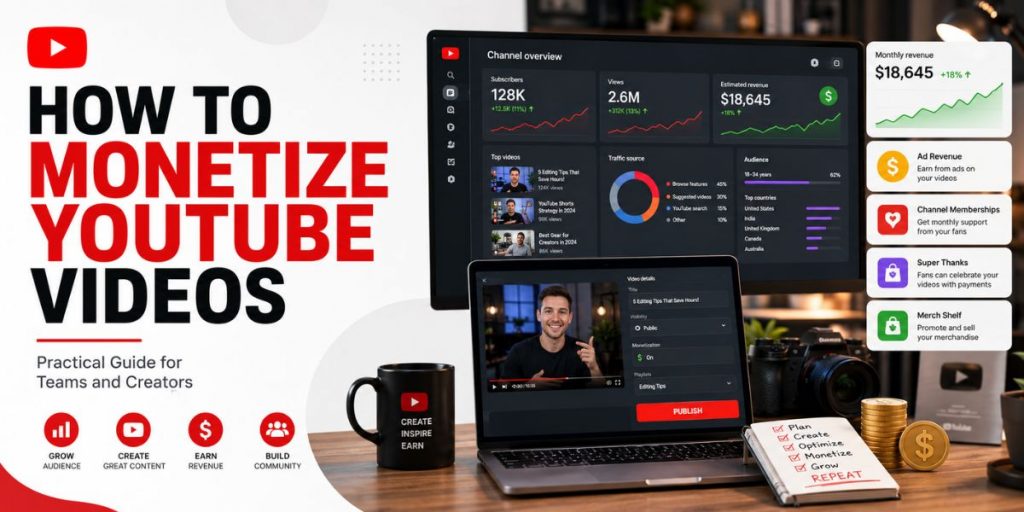
Learning how to monetize YouTube videos starts before a channel reaches the YouTube Partner Program. The stronger approach is to build useful videos, improve click and watch performance, create a repeatable publishing system and develop more than one revenue stream. Monetization is the result of a useful channel—not a shortcut for turning automated uploads into income.
The YouTube Monetization Ladder
| Stage | Current Requirement | Monetization Access |
|---|---|---|
| Expanded YPP | 500 subscribers + 3 public uploads in 90 days + either 3,000 public watch hours or 3M valid Shorts views | Eligible creators can access memberships, Super Chat, Super Stickers, Super Thanks and selected Shopping features. |
| Full YPP Ad Revenue | 1,000 subscribers + either 4,000 valid public watch hours in 12 months or 10M valid Shorts views in 90 days | Watch Page ads, Shorts Feed ads and YouTube Premium revenue, plus eligible fan-funding and Shopping options. |
| Beyond YPP | Depends on your audience and commercial relationships | Sponsorships, affiliate links, products, services, courses, communities and brand partnerships. |
Important: Shorts Feed watch time does not count toward the 4,000-hour long-form threshold. The expanded 500-subscriber YPP level is also available only in eligible countries and regions.
7 Ways to Monetize YouTube Videos
1 · Watch Page Ads
Eligible YPP creators can earn advertising revenue from long-form videos and live-stream watch pages.
2 · Shorts Feed Ads
Creators who reach the full YPP threshold can participate in revenue sharing from eligible Shorts Feed advertising.
3 · YouTube Premium
Eligible creators can receive a share of Premium subscription revenue when Premium members watch their content.
4 · Fan Funding
Memberships, Super Thanks, Super Chat and Super Stickers can turn loyal viewers into direct supporters.
5 · YouTube Shopping
Eligible creators can promote their own products and, at higher eligibility levels where supported, products from other brands.
6 · Sponsorships
Brands may pay creators to integrate products or services when the audience and content are commercially relevant.
7 · Affiliate & Owned Offers
Tutorials, reviews and comparison videos can support affiliate links, services, courses, software or other creator-owned offers.
Create Videos That Can Support Monetization
YouTube reviews whether monetized channels provide original and authentic value. A practical creator strategy therefore starts with content formats where your knowledge, explanation, demonstration or perspective is obvious.
| Video Type | Useful Original Value | Possible Revenue Path |
|---|---|---|
| Tutorial | Show the actual workflow and explain decisions. | Ads, affiliate, product |
| Product review | Add testing, evidence, pros, limits and recommendations. | Ads, affiliate, sponsor |
| Educational explainer | Teach with original examples and structured explanation. | Ads, membership, course |
| Faceless channel video | Use original scripts, analysis, narration and purposeful visuals. | Multiple models |
A faceless channel does not automatically mean low-quality automation. Flonnect’s faceless YouTube workflow shows how to combine scripts, AI-assisted scenes, narration and real screen proof while keeping creator input visible.
Can AI-Generated YouTube Videos Be Monetized?
AI assistance itself is not the problem. YouTube’s monetization policy targets mass-produced, generic, repetitive and inauthentic content. Channels using nearly identical templates, automated scripts and minimal variation can lose monetization eligibility.
Use AI for scripting assistance, first drafts, visuals, captions, voiceovers or editing—but add original explanation, examples, demonstrations and human review. Flonnect’s AI video creation guide follows this draft → proof → review approach.
YouTube also requires disclosure when realistic content has been meaningfully generated or altered with AI. Disclosure itself does not remove monetization eligibility, but creators should accurately complete the AI-use setting when it applies.
Build a Monetization-Friendly Publishing Workflow
1. Start with one searchable viewer problem
Choose a question, task or decision people genuinely need help with. Avoid creating a video only because a keyword has search volume.
2. Write around the viewer outcome
Structure the video as hook → problem → useful steps → example → mistake → next action. Avoid long introductions designed only to increase length.
3. Create or record the main video
For faceless explainers, educational videos and creator drafts, use the Flonnect AI Video Generator. For tutorials, add real screens, dashboards or product demonstrations so viewers can verify what you explain.
4. Edit for watchability
Remove repeated lines, setup delays and dead air. Add accurate captions and keep the explanation moving. Flonnect’s YouTube editing workflow covers trimming, captions, audio cleanup and final review.
5. Package the video before publishing
Write a title that accurately communicates the outcome. Then build a thumbnail around the same promise rather than repeating the full title. Use Flonnect’s thumbnail workflow for hierarchy, clarity and click-focused packaging.
6. Repurpose long videos into Shorts
Extract one insight, mistake, result or demonstration rather than randomly cutting a 60-second section. The YouTube Shorts creator guide uses a hook → value → proof → CTA structure.
7. Learn from the next 30 days
Review impressions, clicks, audience retention, watch time, returning viewers, subscribers and revenue-related metrics. Improve the next batch instead of rebuilding the entire channel strategy after one weak upload.
YouTube Video SEO Checklist Before Publishing
☐ One clear search topic or viewer need
☐ Main topic appears naturally in the title
☐ Thumbnail matches the title promise
☐ First 15 seconds confirm viewer value
☐ Description accurately explains the video
☐ Captions and technical terms are reviewed
☐ Chapters are added when useful
☐ A related video or playlist is linked
☐ Shorts or clips are planned
☐ Monetization and AI disclosures are checked
If growth is still inconsistent, use Flonnect’s YouTube channel growth guide to connect searchable topics, titles, thumbnails, recording, Shorts and analytics into one publishing system.
Monetization Mistakes to Avoid
- Buying views or using ad campaigns expecting that watch time to satisfy YPP thresholds.
- Publishing dozens of nearly identical AI-generated videos.
- Reusing other creators’ content without meaningful original commentary or transformation.
- Choosing topics only for estimated CPM instead of audience usefulness.
- Creating misleading thumbnails that promise something the video does not deliver.
- Ignoring music, footage, image or other commercial-use rights.
- Depending entirely on AdSense instead of developing multiple revenue paths.
- Failing to disclose realistic AI-generated or meaningfully altered content when required.
Create more original YouTube videos without rebuilding your workflow every week
Turn scripts into video drafts, add AI voiceovers and subtitles, combine real screen proof and prepare videos for YouTube and Shorts.
Frequently Asked Questions
Build an eligible channel, join YPP when you meet the required thresholds and enable available features such as ads, Premium revenue, memberships, Supers and Shopping. Creators can also use sponsorships, affiliate offers and their own products.
Full ad-revenue eligibility currently requires 1,000 subscribers plus the required long-form watch hours or valid Shorts views. Expanded YPP access starts at 500 subscribers in eligible regions when additional conditions are met.
Yes. Faceless content can qualify when it is original, authentic and useful. Repetitive templates or minimally changed reused content can create monetization problems.
AI-assisted content can monetize when it meets YouTube policies. Avoid generic mass production and add meaningful original scripts, commentary, demonstrations or creator perspective.
Watch hours generated from Shorts views inside the Shorts Feed do not count toward the 4,000 valid public watch-hour requirement.
No. YouTube states that correctly disclosing qualifying AI-generated or meaningfully altered content does not itself reduce monetization eligibility.